
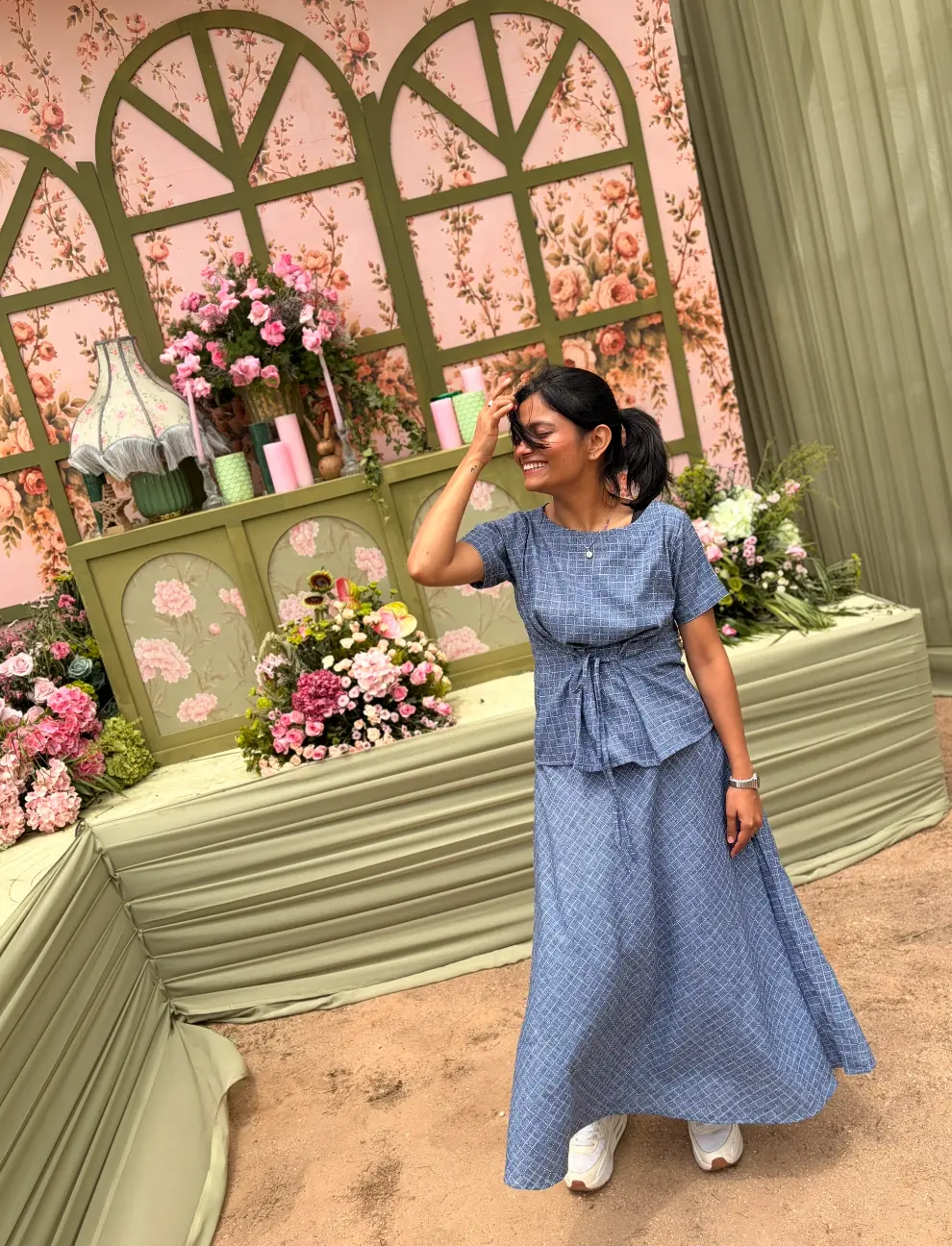
The first version of a celebration exists without flowers. It is a plan of pauses, crossings and sightlines: where someone slows down at the entrance, how a family finds one another, where the music pulls people next and whether the room feels generous before it feels decorated.
We begin by reading the venue as it is. A ballroom has its own rhythm. A home carries memory. A lawn changes with the hour and a mountain site answers to weather before it answers to a moodboard. The architecture tells us what should be held, softened or deliberately left alone.
Furniture is then treated as spatial punctuation. A sofa does more than fill a corner; it can turn strangers towards one another. A long table can create ceremony, while scattered clusters can make a large venue feel intimate. These decisions determine how the celebration behaves once it is full of people.
Only after that do colour, textile and floral choices begin to make sense. Flowers are powerful because they can reinforce a composition already doing its job. Used too early, they can become an expensive way of disguising a room that never found its proportion.
This is why our site conversations often sound less like decorating and more like directing a scene. We look at entrances, foregrounds, negative space and the exact view a guest receives when a curtain opens. The work is temporary, but the experience has a sequence.
By the time the flowers arrive, the room should already know what it wants to be. Their role is not to rescue it. Their role is to make the feeling unmistakable.
Enter the studio ↗