
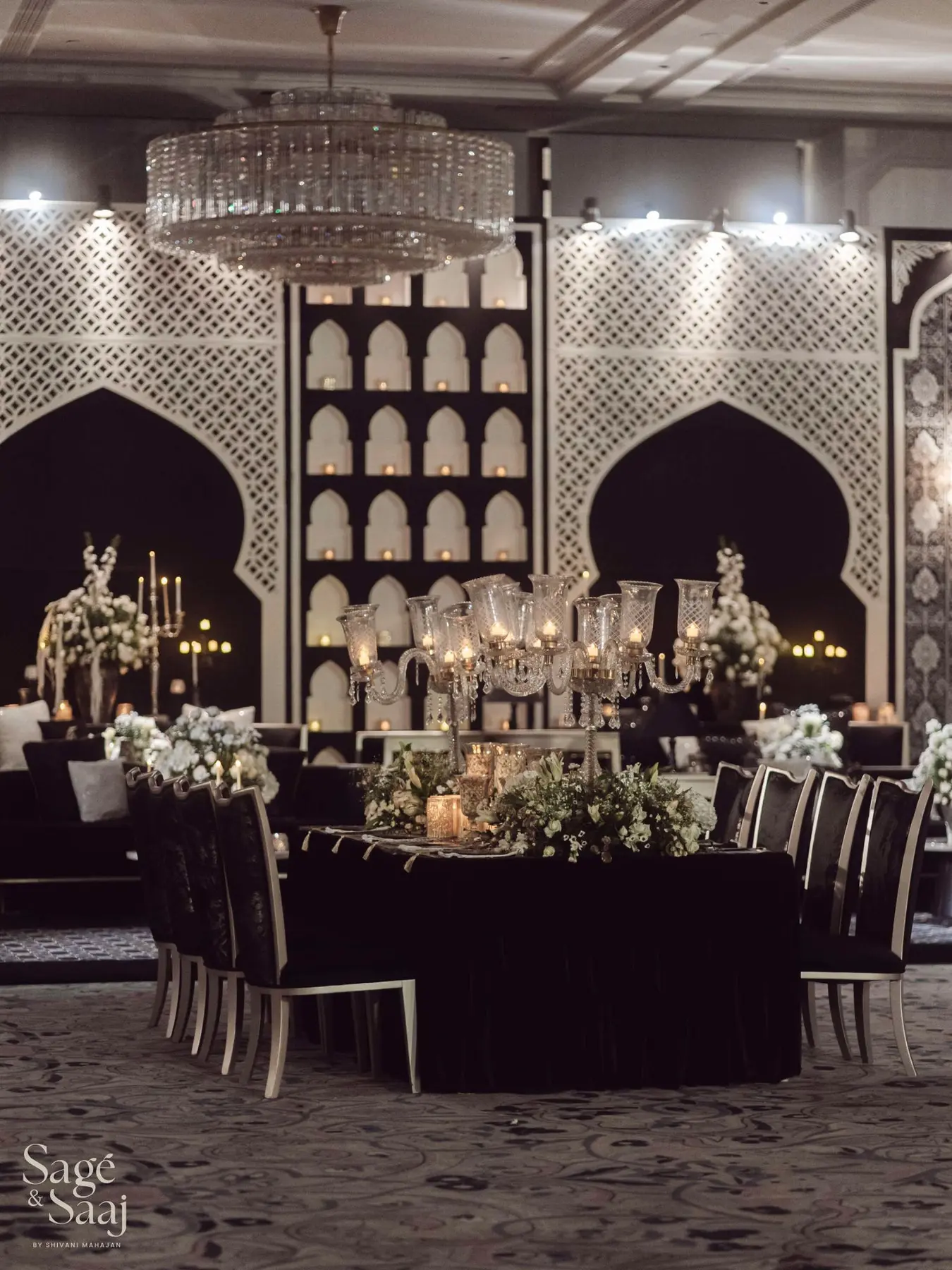
During daylight, an event can be read as a collection of objects. After dark, it is read through light. Burgundy becomes deeper, brass becomes warmer, ivory begins to glow and the parts left in shadow become as important as the parts we reveal.
That is why lighting cannot be postponed until installation day. We consider it while deciding colour, fabric, floral density and the height of every composition. A material that looks beautiful in a studio can disappear under cool overhead light; another can become extraordinary beside a low flame.
Candles are particularly useful because they bring the atmosphere closer to the guest. Chandeliers establish a room, but a flame on a console or dinner table creates intimacy at eye level. Repetition turns those small pools of light into rhythm.
The practical work matters too: burn time, wind, wax, heat, safe clearances, glass heights and how service teams move around the arrangement. Romance only feels effortless when production has considered what can interrupt it.
At our monochromatic Sufi night in Udaipur, black frames and ivory surfaces needed shadow to feel architectural rather than graphic. Candlelight softened the contrast, caught the jaali edges and made the room feel gathered instead of staged.
The final candle is a small gesture, but it completes the composition. It tells every other element where the evening has arrived.
See Monochromatic Sufi Night ↗